
PostStrategy
2 min read
Frameworks like this are powerful, but they come with caveats
A comment on a post by Rubén Domínguez Ibar
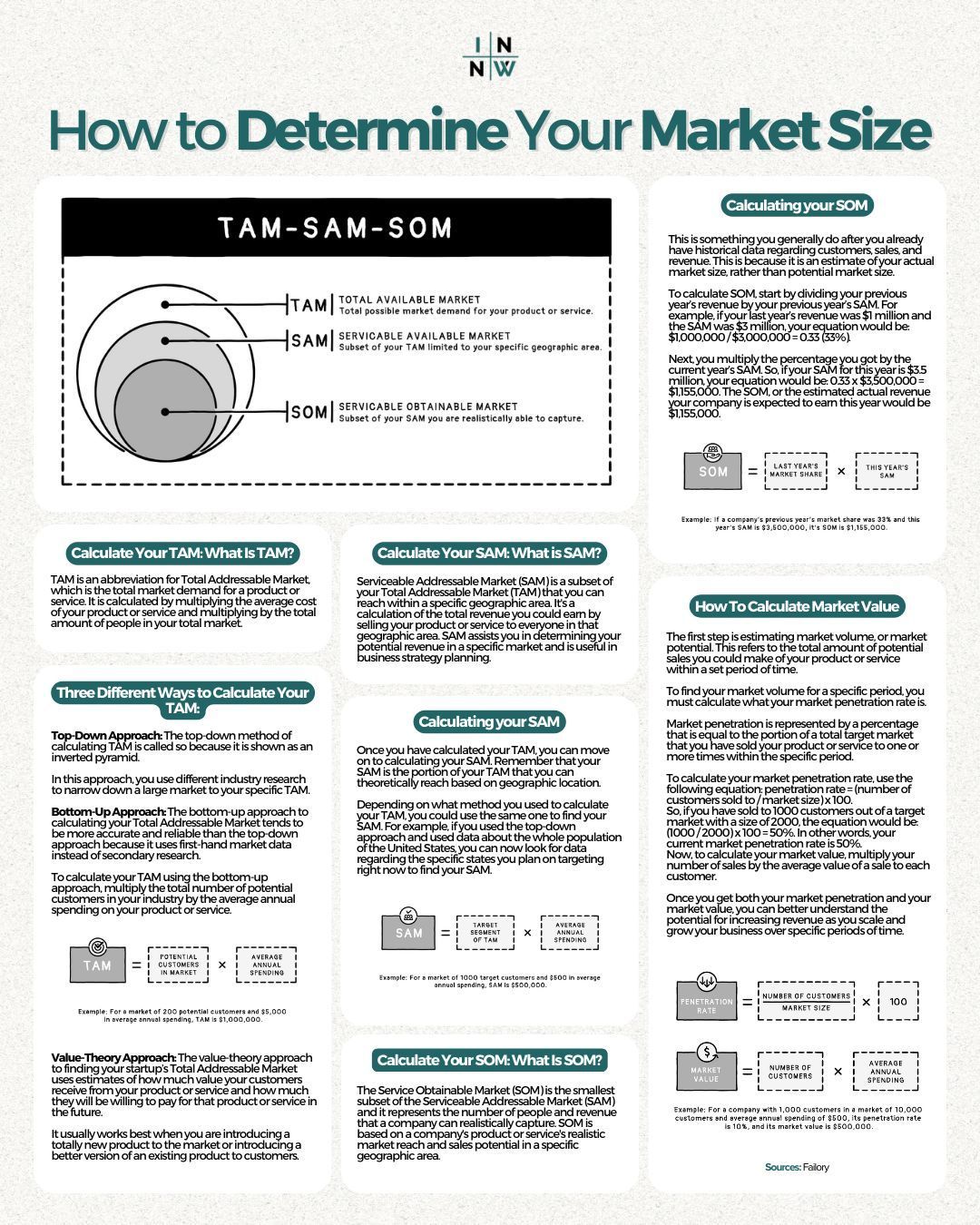
How to Determine Your Startup's Market Size?
The cheat sheet attached below will help. Check my free newsletter for more insights: https://lnkd.in/dm_Wvui3
Read the original on LinkedIn💣Framework Pitfalls:
• Models vs. Reality: A model, no matter how sophisticated, cannot encapsulate the dynamism of market behaviors. As George E.P. Box famously said, "All models are wrong, but some are useful." Models are an approximation of reality but not reality itself.
• Assumption-Dependent: Much like a building’s foundation, the strength of these market models relies on the robustness of underlying assumptions. And assumptions, especially when future oriented are often completely off mark. Just think of the bursting dot-bomb bubble in 2000.
• The GIGO Effect: Quality of data is paramount; erroneous inputs inevitably lead to flawed outputs. It’s the age-old computer science adage in full swing.
• Illusion of Precision: Numbers can be beguiling, implying a validity that's often not reflected in the volatile market space. Again, remember the highly elaborated DCF models in the dot-bomb era. They digested tons of numbers to spit out totally wrong company valuations, but with a specificity to the third decimal place.
• Content vs. Framework: Applying a great strategic framework doesn't inherently yield a great strategy. It ensures we're asking the right questions, but doesn't mean we give the right answers. Strategic tools can't replace strategic thinking and creativity.
What can we do about it?
🔑 Mitigating Framework Limitations:
• Grounded Research: Root your strategy in reality by beginning with market research that delves into the heart of consumer behaviors, needs, and trends.
• Responsive Data: Stay nimble—refresh your models with real-time data and adjust to market feedback.
• Beyond Numbers: Marrying quantitative data with qualitative insights means not just counting customers but understanding their stories.
• Common Sense Check: Run your models against common sense. Do these projected results make sense compared to other market players, similar markets or my previous experience? If not, drill down!
• Intuitive Insights: Don't ignore what your gut is telling you; sometimes, intuition catches what data can't.
• Modeling vs. Testing: Validate your model by testing in real markets and with MVPs. Theoretical success is no match for tested performance.
Frameworks and models are invaluable, I love them! Same for numbers. Quantification helps cut through uncertainty and brings order to chaos.
However, use them with discernment. A strategic model is just a tool. Supplement it with insights from the ground, common sense, and an intuitive grasp of the market. Frameworks are maps but maps are not the territory.