
PostVision · AI & Future
2 min read
A bold vision 2040: Elevating urban mobility into the sky
A comment on a post by Sasa Spasic
 Video
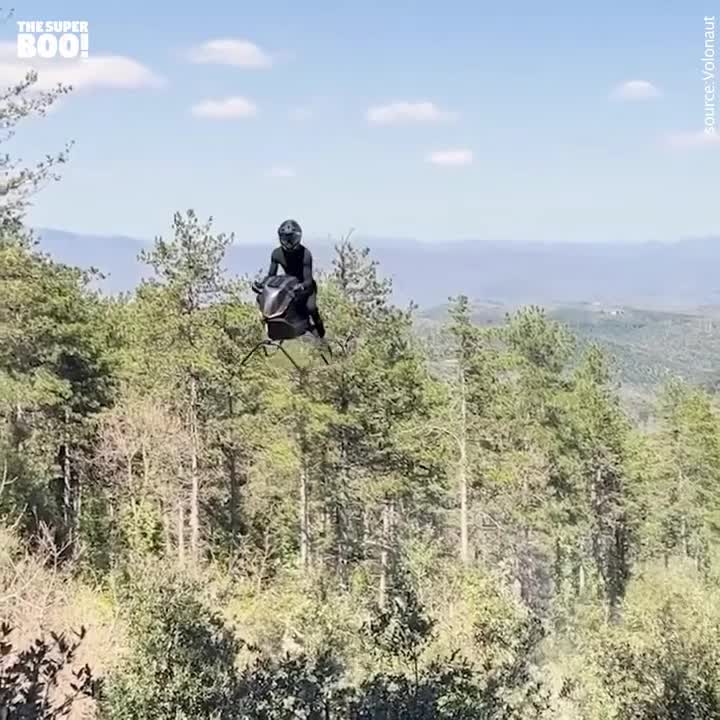
A REAL FLYING MOTORBIKE
Remember the speeder bikes from Star Wars? Volonaut’s Airbike brings it to life with its futuristic electric flying motorcycle, which takes off vertically and offers solo air travel with a sci-fi twist. Constructed from carbon fiber and 3D-printed components, this prototype has the potential to redefine the future of…
Watch the original on LinkedInTalking about bold visions, this video inspired me to connect the dots between AI, sustainability, autonomous driving, and now future urban air mobility.
While these airbikes look like infinite fun, they still seem like sci-fi.
But could their potential to push sustainable mobility to the next frontier become real, if the right systems are built around them?
The Vision: A layered urban sky
Imagine:
✅ Fully autonomous airbikes coordinated by AI & IoT
✅ Charging hubs on rooftops and towers
And as a result:
✅ Shorter air routes: a 10 km road trip could become just 6 km in the air, saving distance, time, and energy
✅ Decongested ground space through drastically fewer cars
Unimaginable? Maybe. But electric cars - and even more autonomous ones - once seemed the same (hello Waymo). Air mobility could soon become part of urban logic.
Why the current urban traffic model is broken
⛔ Roads are overcrowded. Cities are suffocating.
⛔ Ground vehicles are limited by fixed infrastructure.
⛔ Urban commute speeds in major cities average below 20 km/h.
The catch: Manual pilots aren’t feasible
Despite their coolness, airbikes won’t scale unless fully autonomous. Thousands manually flying through urban corridors? Chaotic and dangerous.
Unlike in cars, humans aren’t trained to operate in 3D traffic systems (psychomotorically, cognitively, situationally). Here, autonomy isn’t optional, it’s a prerequisite.
What DOES make urban air autonomy possible
✅ No pedestrians or intersections
✅ Height-based traffic zoning
✅ Real-time AI and IoT coordination
Aircraft autonomy is already real: most planes fly 95% on autopilot. Full pilotless flight is technically already possible. The challenge isn’t tech, but regulation, infrastructure and trust.
Of course, 10,000-meter aviation isn’t the same as urban airspace. But it's already happening:
💡E.g. China’s EHang 216 completed hundreds of autonomous test flights in Guangzhou, Shanghai and other cities and became the first certified eVTOL in 2023, a milestone for pilotless urban air mobility.
The limitations we must overcome & systems we must build
👉 Battery limits (~20 min flight time)
👉 Noise: jet propulsion still too loud
👉 Regulation: no urban air traffic frameworks
👉 Air Traffic Control AI: to manage paths, altitude, and collision avoidance
👉 Infrastructure: charging hubs, rooftop landing zones, and smart routing systems
If autonomous flying succeeds and we manage urban airspace safely, then air mobility could become both more sustainable and safer than road traffic.
How do you see it: bold vision or unrealistic future?