
PostStrategy · AI & Future
2 min read
9 Key Strategic Challenges 2024
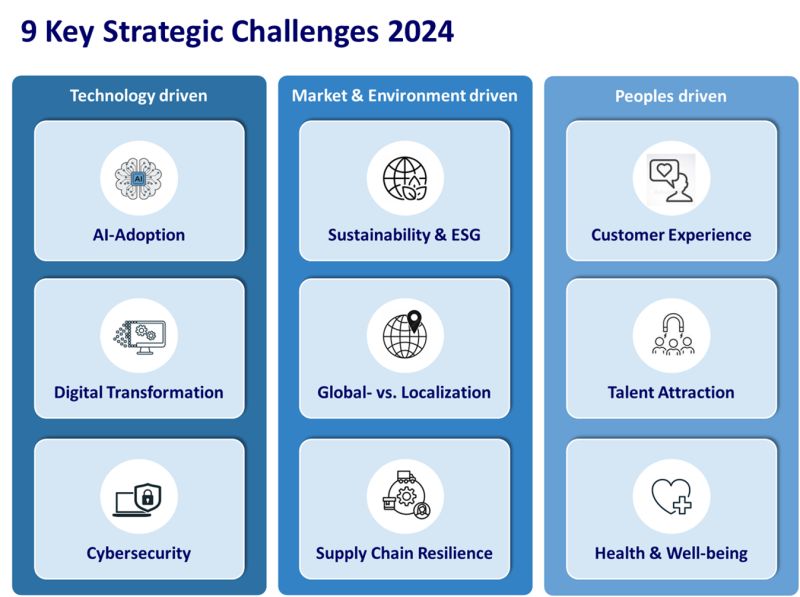
In today's rapidly evolving business landscape, navigating strategic challenges is key for organizations aiming to stay ahead. From AI-adoption to ESG and Workforce transformation, each challenge presents unique opportunities to innovate, gain competitive advantage and redefine industry standards.
1. AI-adoption
Most disruptive subset of digital transformation consisting in strategic integration of artificial intelligence technologies into business processes and products to enhance efficiency, decision-making, and innovation
2. Digital Transformation
The ongoing integration of digital technology into all areas of business, changing how businesses operate and deliver value to customers, including AI, cloud computing, and data analytics
3. Cybersecurity & Data Privacy
As businesses collect and utilize more data, ensuring the security of this data and protecting against cyber threats is key
4. Sustainability & ESG
Sustainable and ethical corporate behavior, with a focus on reducing their environmental impact, promoting social justice, and ensuring good governance practices. This includes transitioning to green energy, adopting circular economy principles, and enhancing transparency and accountability
5. Globalization vs. Localization
Questions about further globalization and trend towards localization, driven by protectionist policies, trade tensions, and the desire for customized local experiences fuels need to balance global scale with local relevance
6. Supply Chain Resilience
Pandemic and geopolitical developments highlighted vulnerabilities in global supply chains and therefore the need to increase resilience through diversification of supply sources, investment in supply chain technologies, and closer collaboration with suppliers
7. Customer Experience & Personalization
Offering personalized experiences to customers through the use of data analytics and AI is becoming a key differentiator for businesses. This involves understanding customer preferences and behaviors to tailor products, services, and interactions
8. Talent attraction & Workforce Transformation
The nature of work is changing, with remote work becoming more common and a greater emphasis on work-life integration. Companies are rethinking their talent management strategies to attract and retain talent, which includes embracing flexibility, reskilling, and upskilling employees
9. Health and Well-being
The health and well-being of employees and customers have taken center stage and businesses are investing in healthier workplaces, mental health initiatives, and products/services that promote well-being
Addressing these strategic challenges requires a keen understanding of the current business environment and a forward-thinking approach to organizational development and stakeholder engagement.
In my next post, I will delve into the underlying core competencies needed to effectively tackle these challenges.