
PostStrategy
1 min read
8 Core competencies for corporations 2024
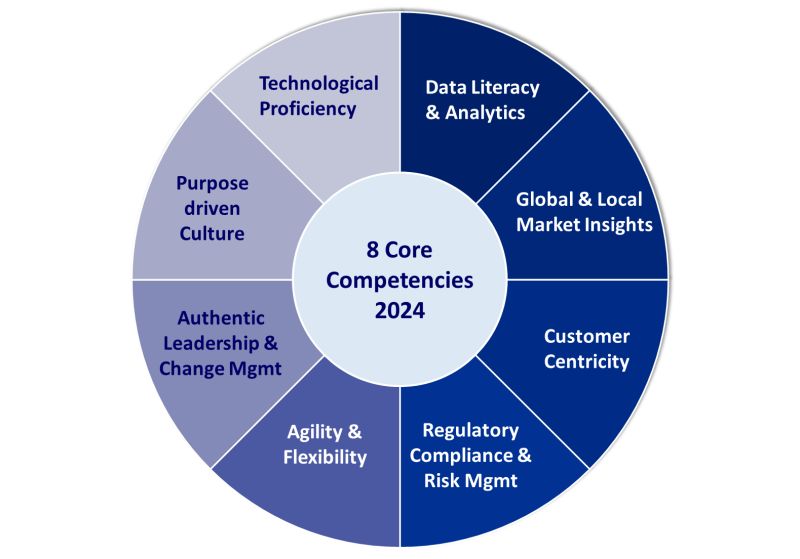
Following up on my post on strategic challenges 2024 here the underlying core competencies:
1. Technological Proficiency
Mastery over current and emerging technologies. These include AI/ML, VR/AR, cloud and quantum computing, blockchain, robotics, etc. to enhance efficiency, decision-making, and innovation
2. Data Literacy & Analytics
Competence in data collection, analysis, and interpretation. Companies must be able to leverage big data and analytics to gain insights into customer behavior, operational efficiency, and market trends
3. Global & Local Market Insights & Adaptation
Mastery in balancing global strategies with local tactics, combining analytical prowess and cultural empathy. It involves understanding and aligning local market nuances with global brand values. Competencies include cultivating local partnerships, knowledge sharing and best practices across borders. Thereby, the ability to integrate localized insights into the broader global strategy is key
4. Customer-Centricity
A radical orientation of the entire organization towards the customer and its needs. Competencies include advanced user experience design, CRM strategies, personalization technologies. Beneath lies a culture that values and prioritizes customer feedback and satisfaction.
5. Regulatory Compliance & Risk Management
Expertise in identifying, assessing, and mitigating risks, along with ensuring compliance with the myriad of global and local regulations
6. Agility & Flexibility
Ability to quickly respond to changes in the market, technology, and regulatory environments. This includes using agile methodologies in project management and product development to accelerate innovation and responsiveness
7. Authentic Leadership & Change Management
Effective leadership that can drive cultural change, inspire teams, and align the organization towards common goals. Competencies include vision setting, emotional (EQ), adversity (AQ) and spiritual (SQ) intelligence, and the ability to manage resistance to change
8. Purpose-Driven Culture
Commitment to societal and environmental contributions beyond profit. It's anchored in core values and missions and aligned with organizational action. Decision-making is driven by purpose and motivates innovation that addresses broader societal needs. Enhanced brand reputation, talent attraction and customer trust can be gained as a by-product.
This diverse set of core competencies require a cultural shift towards continuous learning, adaptation, and innovation, ensuring that the organization remains agile and resilient.
Any essential competency missing?