PostLeadership & Culture · Vision
2 min read
Cultural change is the hardest to achieve and often too slow to gain momentum! Here's what to do:
A comment on a post by Siobhán (shiv-awn) McHale
Early in my career, I was taught to
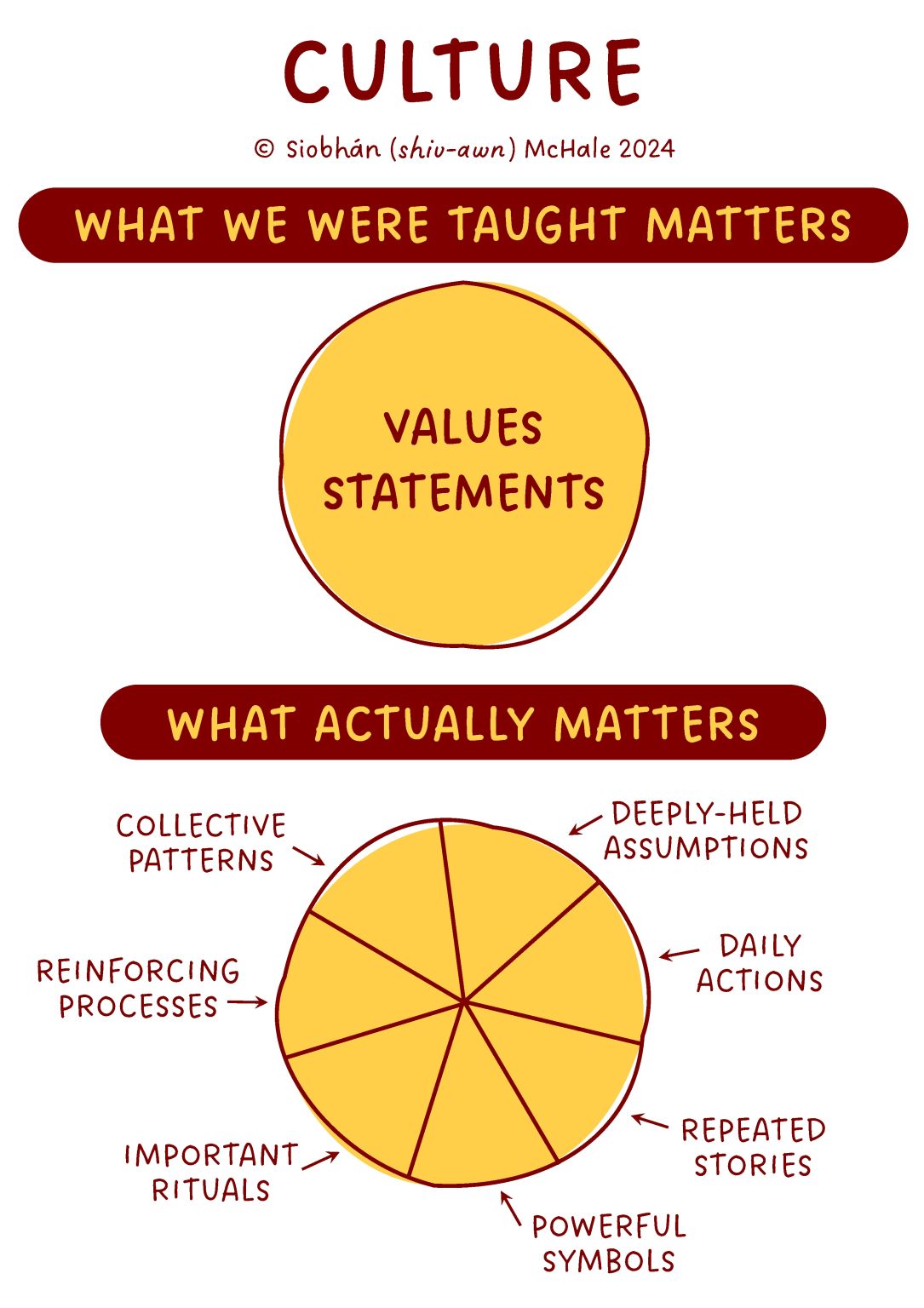
develop values statements in order to shape culture. I don’t think I’m alone. What I discovered was that the significant work involved in crafting and wordsmithing values statements often made very little difference to how the team functioned. What mattered more were: 📍Deeply-held (and often-hidden) assumptions…
Read the original on LinkedInGreat post (and powerful graphic) of Siobhán (shiv-awn) McHale pointing to a typical set of cultural expressions and therefore leverage points to change it:
- Deeply-held assumptions
- Daily actions (especially by leaders)
- Repeated stories
- Powerful symbols
- Important rituals
- Reinforcing processes
- Collective systemic patterns
...instead of just formulating value statements.
While I strongly agree, I would like to add some observations based on my 20+ years of experience with substantial transformation initiatives:
1. Change Vision
Cultural change (as any bigger change) needs a CHANGE VISION. It’s not the business mission or a value statement, which often pretend to describe the current reality.
Instead, it is an inspiring, not easy to attain and often multifaceted end state that actually MOBILIZES PEOPLE by encapsulating a vivid description or a metaphor to spark imagination.
It's not just a SMART goal. In fact it needs multiple subordinated SMART goals layered on different tactical and strategic levels to be achieved until the vision is finally reached.
2. Effective value statements
While formulating value statements is insufficient, they are not without effect either. Like the vision, there must be a level of written description both as a reference point of orientation and as a sign of commitment.
If these statements are ineffective then it's because either their positioning, formulation or the process to formulate them was inadequate or they're done in isolation. Properly deployed and embedded in a well-structured change process they're an important piece of the puzzle.
3. Structural change
Written statements like visions or value statements in a broader sense are "structural" and work "from the outside". The Strategy and Operating Model are also “structural”.
Culture though manifests largely WITHIN or between INDIVIDUALS, in their beliefs, values, attitudes, behaviors and interactions. "Structures" clearly are something different, however changing the “structures” also has a clear impact on the culture.
That's evident already from the system thinking point of view and I have seen that again and again in practice. By creating new outer facts, I will influence inner realities of individuals.
While the operating model is not the culture, changing it also affects the culture because it is sending a strong signal. Apart from that, certain cultures thrive better in certain operating models.
Therefore, "cultural change" should be embedded in "structural change" and ideally managed within the same initiative.
Another essential (and highly unpopular) topic within cultural change "Replacement of people", I will cover in my next post.