
2 min read
Cultural change without REPLACEMENT OF PEOPLE is hopeless!
At least if the culture is found to be TOXIC or the gap between current and desired culture is substantial and the results are expected fast.
✅ When Lou Gerstner took over as CEO of IBM in the early 1990s, he replaced many top executives and brought in new leadership to drive cultural and strategic change, which is credited with turning the company around.
✅ Jack Welch replaced 12 out of 14 business heads during his tenure making GE the most valuable company in August 2000.
✅ After Steve Jobs’ return to struggling Apple in 1997, he immediately restructured the executive team bringing in a mix of trusted colleagues and new talents who aligned with his vision, including Tim Cook.
I'm not talking about redundancies or cost cutting exercises, these are different cases (although they can coincide). Here only staff, workers and line employees typically become the “target”.
I'm also talking about managers, executives and other key people that were responsible, stood for and modeled the culture that is now being changed.
So what exactly is culture anyway?
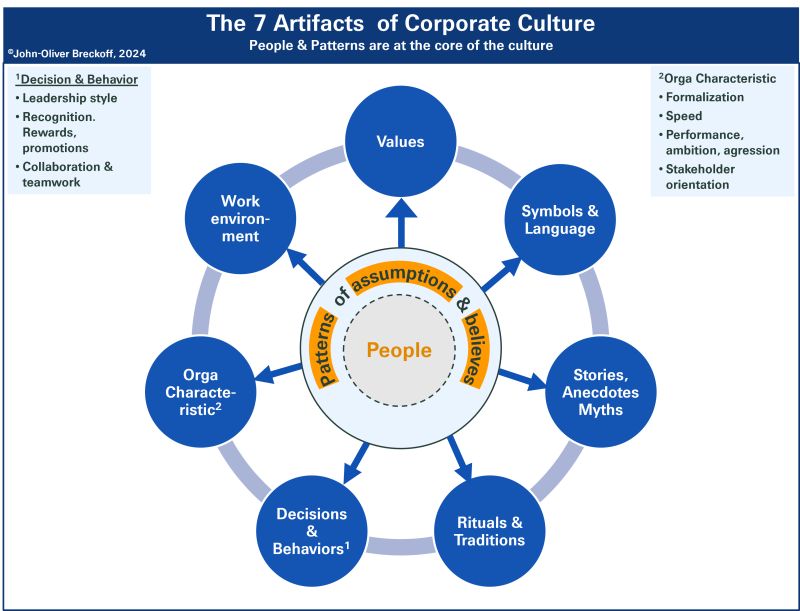
Corporate culture is not that easy to define. According to B. Jaworski from Claremont University it’s “a pattern of shared basic assumptions about how the organization survives and thrives”.
And this pattern of assumptions & beliefs is then reflected in the organization through:
➡ Values (outspoken or not)
➡ Entrenched rituals and traditions
➡ Used symbols and habitualized language
➡ Handed-down stories, anecdotes & myths
➡ Work environment
➡ Decisions and behaviors in terms of
↳ Leadership and management style
↳ Recognition, rewards and promotion
↳ Contribution, collaboration & teamwork
➡ Collective organizational characteristics like
↳ Degree of formalization
↳ Speed
↳ Performance, ambition & aggressiveness
↳ Stakeholder orientation
So culture is more than the sum of its people currently working there.
But in fact it’s not THAT much more.
Almost all of these cultural expressions and manifestations listed above take place THROUGH, WITHIN or BETWEEN people working in the organization.
The culture manifests in decision and patterns but the patterns are lived out by people. Replacing people affects the pattern.
Of course, people can also CHANGE but they change slowly and the less their environment changes the less likely it is. Individuals' identities are closely tied to their group membership and environment (Social Identity Theory).
And their environment is? Yes, other people, especially management.
There needs to be an intake of new and outflow of existing people for 2 reasons:
✅ It brings in new PERSPECTIVES
✅ And sends a very strong SIGNAL
The organization’s size, age and need for change of course make a huge difference and replacing people alone evidently is not enough. However, if the critical mass of different new people is too low cultural change will be very hard or very long.